
Ethiopia and Eritrea Cut Ties: What Is Known and Claimed
Ethiopia closed its embassy in Asmara and expelled 10 Eritrean diplomats on 1 October, and Eritrea severed all ties. The US had lifted sanctions on Eritrea's ruling party and military less than two weeks earlier. The military claims behind the rupture remain unverified.
![Photo of [place], with the Horn of Africa setting for the report on the Ethiopia–Eritrea diplomatic break.](/_next/image/?url=https%3A%2F%2Fmedia.reclaimeritrea.com%2Fnewsroom%2F2026%2F10%2Fethiopia-eritrea-cut-ties-known-and-claimed.webp&w=2000&q=75)
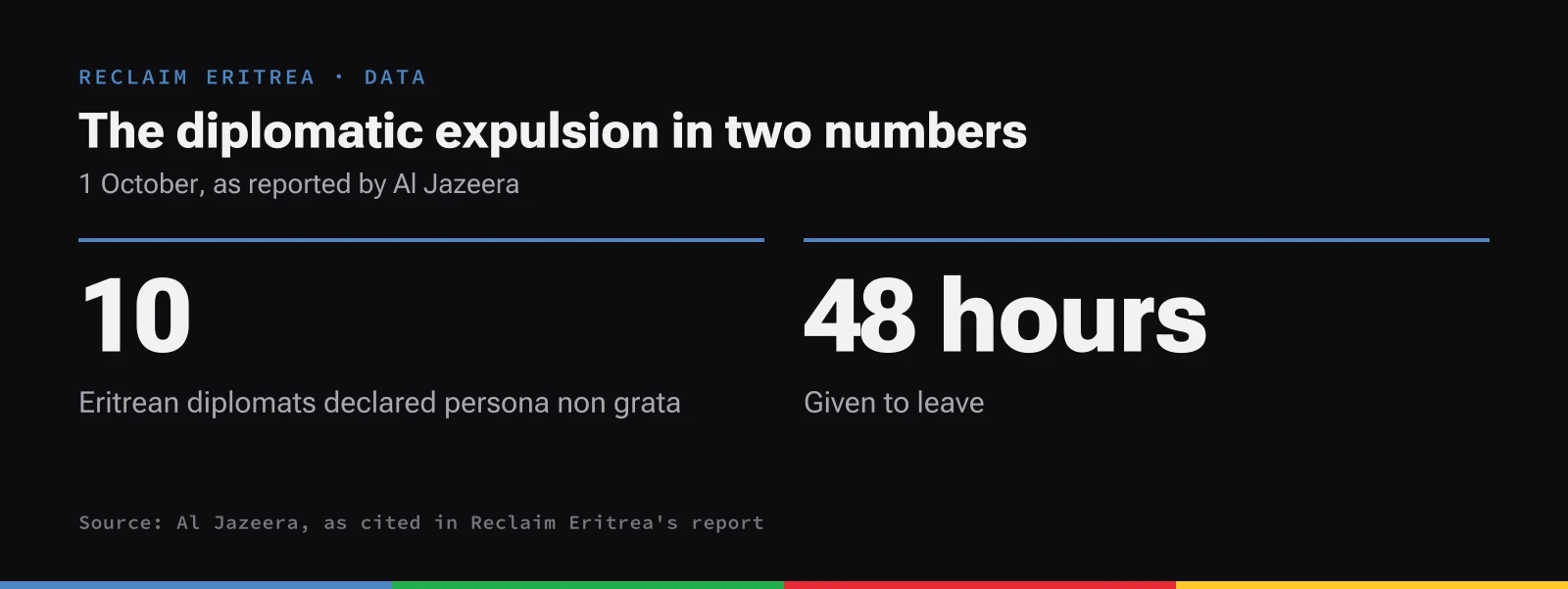
On 1 October 2026, Ethiopia announced that it was closing its embassy in Asmara and declared 10 Eritrean diplomats persona non grata, giving them 48 hours to leave. Al Jazeera reported that the group included the chargé d'affaires and diplomats accredited to the African Union. Eritrea's foreign ministry answered in a statement on X, saying it was severing all diplomatic ties with Ethiopia. Several outlets confirm these events, including France24.
The reasons behind the rupture are far less settled. This piece separates what is established from what each government says, and it marks the point where the evidence runs out. Where we offer analysis, we say so.
Two governments, two accounts
Ethiopia's foreign ministry cited "direct and indirect acts of hostility and belligerence" by Eritrea, and said the expelled diplomats "pose a direct threat to Ethiopia's national security." In the material we have reviewed, it has not shown evidence for either statement.
Eritrea's ministry called the claims "astounding" and accused Ethiopia of pursuing "an agenda of incessant hostility." It said it had "no option but to reciprocate in kind." It also accused Ethiopia of hosting, training and arming Eritrean opposition groups. That is a government allegation too, and no public evidence has accompanied it. We have not seen the full text of either statement.
Egypt and the African Union
A parallel dispute opened with Cairo. Ethiopia declared the Egyptian diplomat Ahmed Moharam Ahmed Soliman persona non grata, according to Ahram. Egypt retaliated by expelling the Ethiopian embassy counsellor Egazi Emelo Borougi, also with 48 hours' notice, Anadolu reported, citing Egypt's state news agency MENA. A senior Egyptian official told MENA that Cairo rejects interference in other countries' internal affairs, and that Ethiopia has "a history of attributing its failures" to foreign interference.
The African Union Commission called on Ethiopia, Eritrea and Egypt to show "maximum restraint." We have only a secondary report of that statement, relayed from Anadolu, and not the Commission's own text.
The battlefield: claims without verification
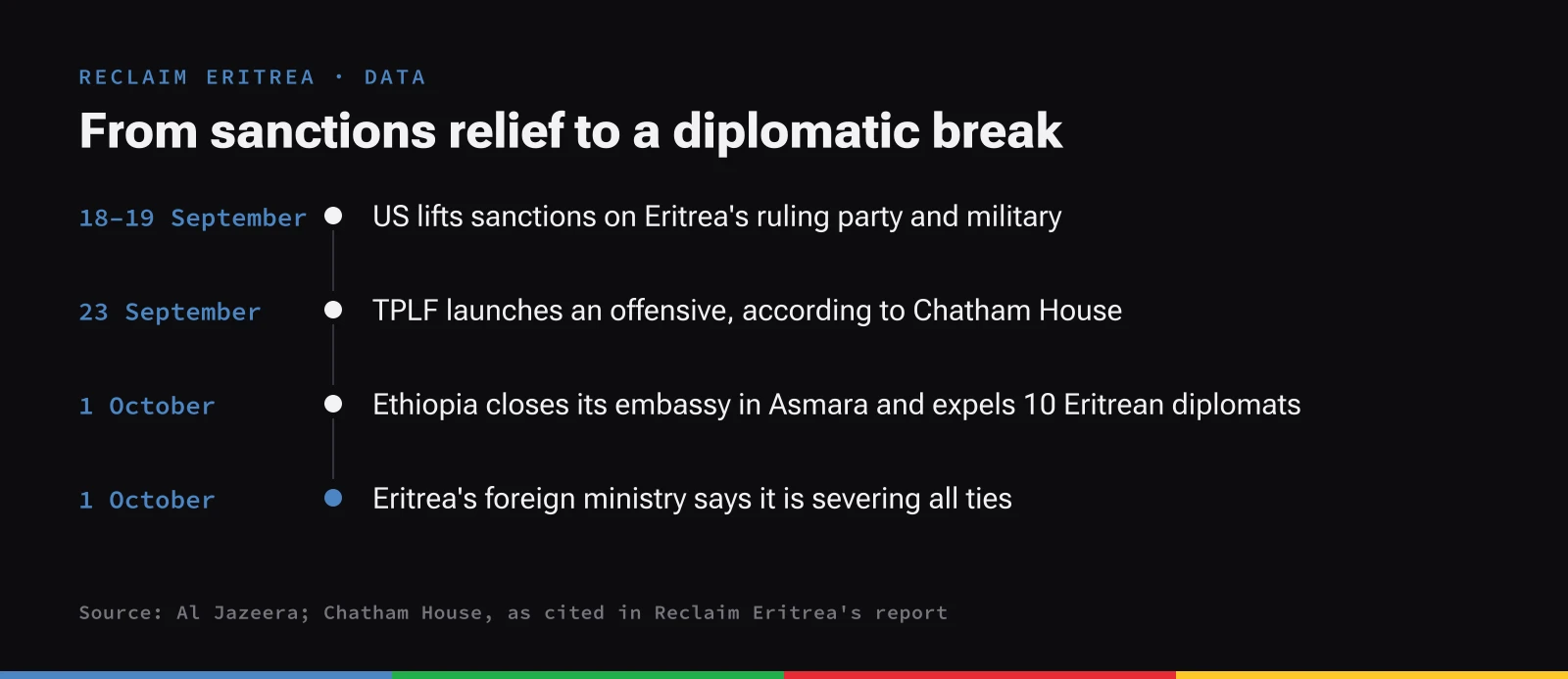
The backdrop is renewed war. According to Chatham House, the TPLF launched a major offensive on 23 September, seizing airports in Tigray, and fighting has spread into Afar and Amhara. The Council on Foreign Relations describes the TPLF as one of seven groups in the Alliance for Survival, a coalition aiming to overthrow Prime Minister Abiy Ahmed.
Ethiopia accuses Eritrea, Sudan and Egypt of backing that alliance. All three deny it, and no independent evidence has been offered. Separately, the chief administrator of Afar, Haji Awol Arba, told Al Jazeera that Eritrean forces are fighting in Afar and control two-thirds of the region. Martin Plaut's situation report carries the same claim. It rests on one source, we have found no Eritrean response, and nothing independent confirms Eritrean troops on Ethiopian soil.
Addis Ababa also calls for caution. Blasts were heard overnight on 30 September and 1 October, and an intelligence official confirmed three blasts in three locations, US News reported. Ethiopia's intelligence service had just banned drone flights. An anonymous source linked to the opposition claimed drone strikes on military headquarters. Reuters could not verify this. No damage was seen near the base, and it is unclear whether the blasts were an attack or military exercises.
How we got here
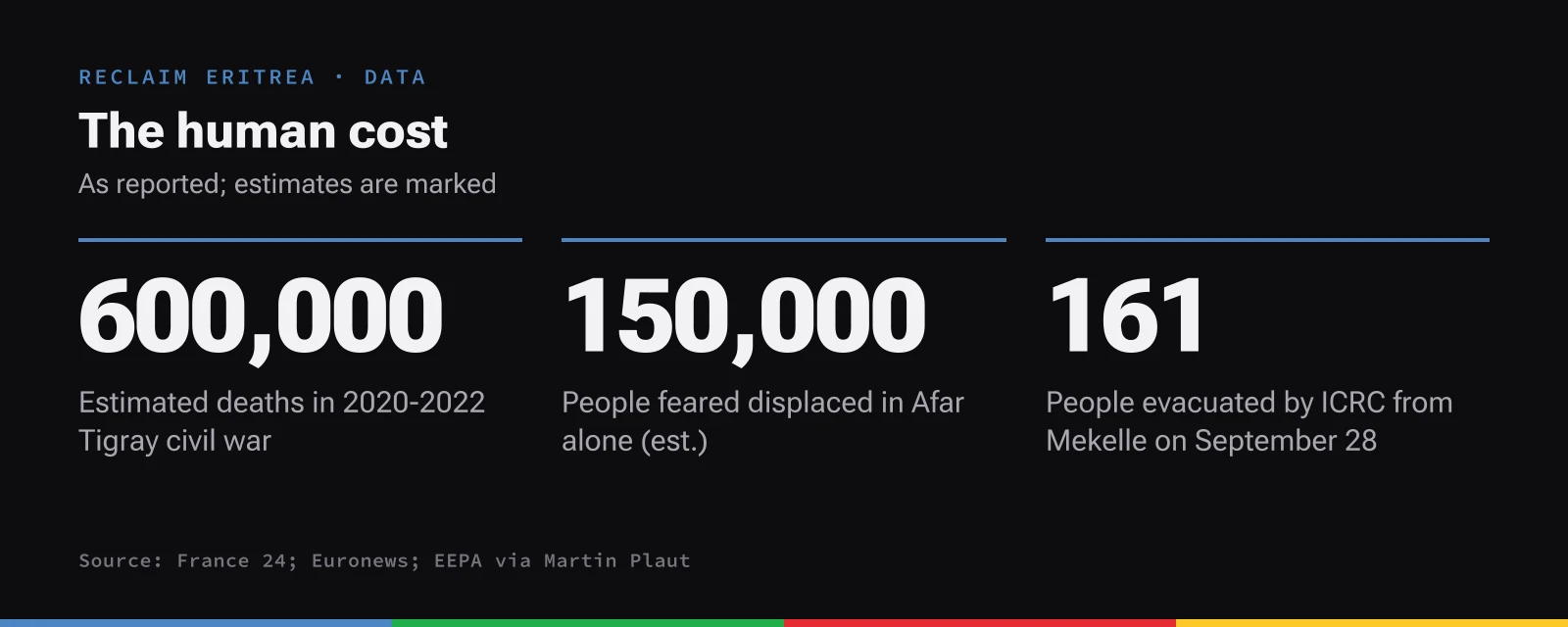
In July 2018, the two countries restored relations and signed a peace agreement ending two decades of hostility that followed the 1998–2000 war. In the 2020–22 Tigray War, Eritrean forces fought alongside Ethiopian federal forces against the TPLF. France24/AFP carries an estimate of 600,000 deaths in that war. It is an estimate only, the source gives no range, and we treat it with caution. The November 2022 Pretoria Agreement ended the fighting, but Eritrea was not a party to it.
The markers since then point in one direction. Abiy sought international mediation over tensions with Eritrea in October 2025. Eritrea withdrew from IGAD in December 2025. In February 2026, Reuters reported that Eritrea rejected Ethiopian accusations of military aggression as "false and fabricated." Abiy has also repeatedly stated that Ethiopia has a right to sea access, which the analysis we reviewed says Eritrea views as an implicit territorial threat.
The Red Sea and the sanctions
On 18 and 19 September, the US lifted sanctions on Eritrea's ruling PFDJ, its military and other entities. A State Department spokesperson said the decision was taken "to advance US regional interests," Al Jazeera reported. Information Minister Yemane Gebremeskel welcomed it, saying the 2021 sanctions had caused "incalculable damage." Washington imposed those sanctions over abuses in Tigray, including credible accounts implicating Eritrean forces. We have not seen who documented those abuses, so we say nothing further about them.
The sequence is on the record. The TPLF offensive began on 23 September, days after the sanctions were lifted, and the diplomatic break came about a week after the offensive began. On 24 September, US Ambassador Ervin J. Massinga criticised the TPLF for launching a large-scale offensive and warned of possible further sanctions. Nothing in the evidence links these events causally, and we do not suggest a link.
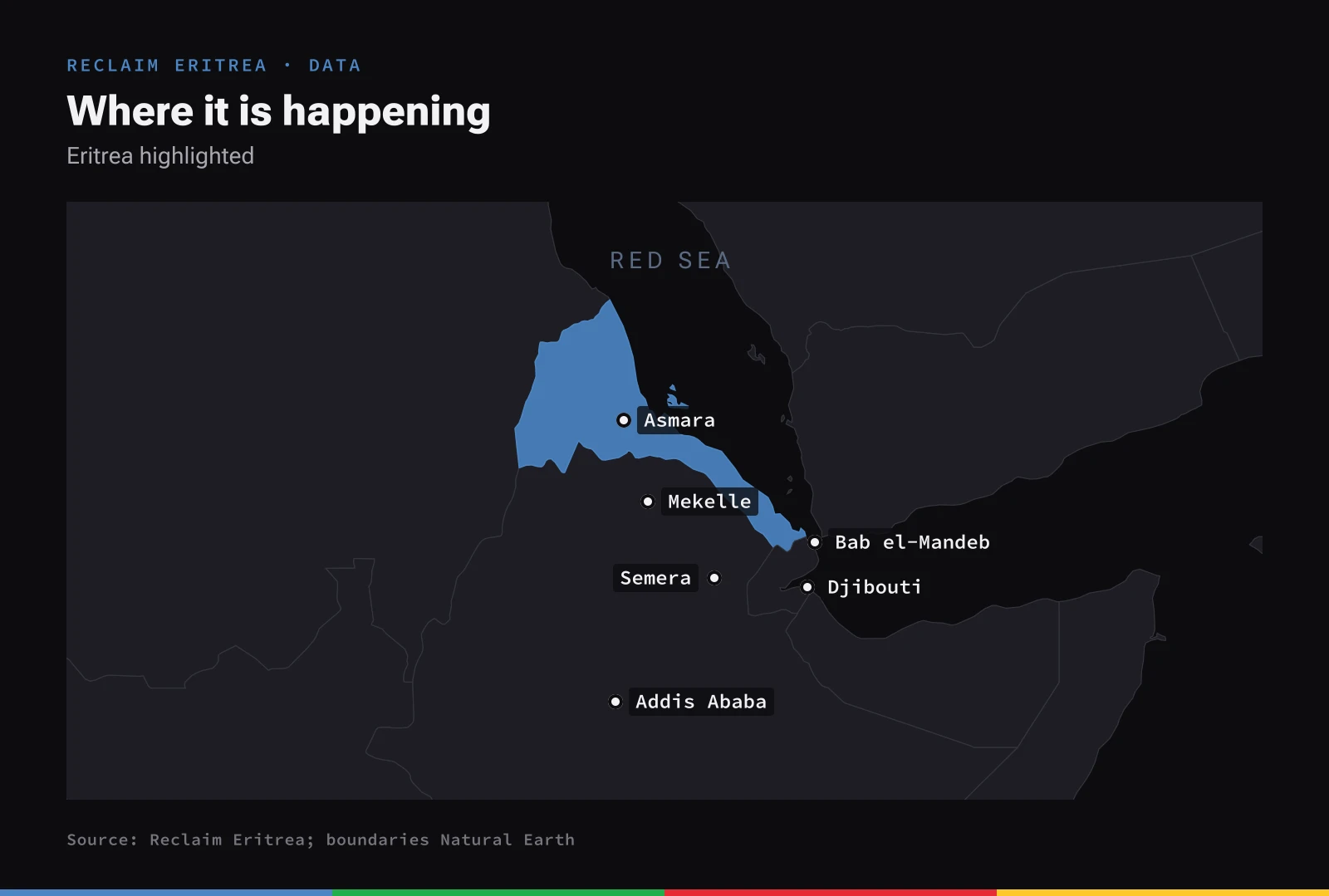
What follows is analysis. Eritrea holds more than 700 miles of Red Sea coastline near the Bab el-Mandeb strait, where Houthi advances in September have added pressure on shipping. Ethiopia is landlocked, and an estimated 97 percent of its trade passes through Djibouti, according to JPost and The Media Line. Egypt has drawn closer to Eritrea during its dispute with Ethiopia over the Grand Ethiopian Renaissance Dam. The US rapprochement with Asmara was reportedly brokered partly by Egypt, though no source is given for that. Analysts also warn of overlapping Gulf, Turkish, Egyptian and Israeli interests in the Horn. For ordinary people, this rivalry counts most when it closes a border, cuts a corridor or reverses a sanctions regime.
The human cost, and what is not known
The suffering recorded in our evidence lies mostly on the Ethiopian side of the border. The ICRC evacuated 161 people from Mekelle to Semera on 28 September, and communications, banking and services in Mekelle are disrupted. Euronews reported fears that 150,000 people may be displaced in Afar. That is an unconfirmed estimate. Tigrayan organisations and human rights groups report federal air and drone strikes on schools, homes and food aid trucks. These are allegations, and we have not been able to name the groups. We have no casualty figures for the current fighting.
On Eritreans themselves, our evidence is silent. Indefinite national service remains a concern for conscripts and their families. We have no evidence of mobilisation, border closures, refugee movements or changes to consular services. Nor do we know how the break affects travel, remittances or family contact for the diaspora. These are open questions, not predictions.
Other gaps remain. We have neither government's full statement and no evidence for the expulsions. We have no Eritrean reply on Afar, and no word from the Tigray authorities, IGAD or Sudan. Humanitarian access is unclear. Until those gaps close, the verified record is thin: two capitals have cut formal contact, and the claims that explain why have yet to be tested.
Keep reading
More from Politics
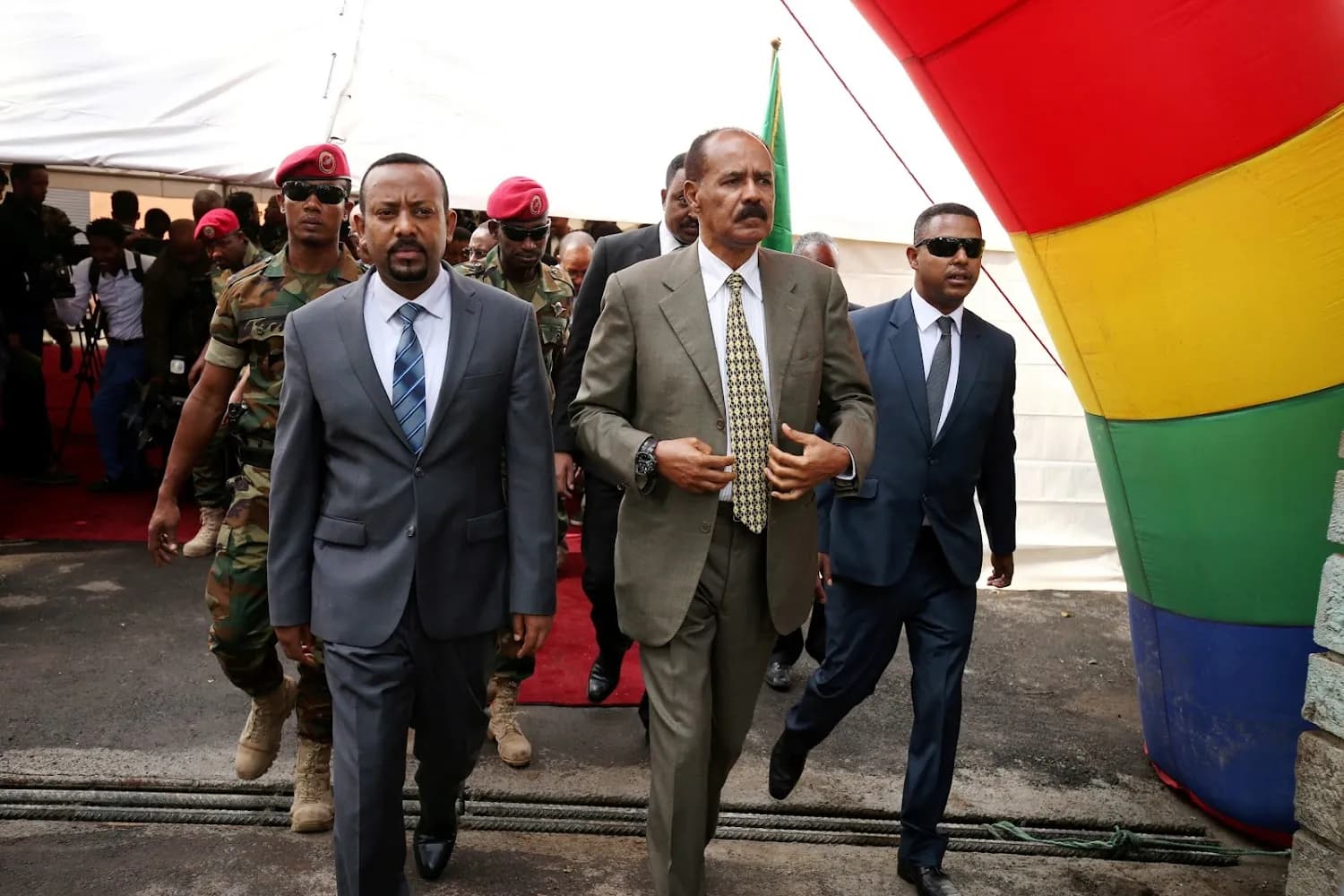
Isaias Afwerki Cancels All Flights To and From Ethiopia
In a new shocking turn of events, Isaias Afwerki ordered the cancellation of all Ethiopia Airlines flights to and from Ethiopia.
The Hand That Feeds: Eritrea’s Dangerous Reliance on Russia
Last year, Isaias Afwerki ingratiated himself with Vladamir Putin at the Russia-Africa Summit in St Petersburg, RU. On multiple occasions, Isaias, who has publicly proclaimed Eritrea's self-sufficiency, referred to Vladimir Putin and Russia as his leader. Putin looked quite flattered.
Biden Sends 1,500 Troops to US-Mexico Border
“Trying to score political points or intimidate migrants by sending the military to the border caters to the Republican party’s xenophobic attacks on our asylum system,” Menendez said in a statement.